Augmented reality (AR) is an interactive experience of a real-world environment where the objects that reside in the real world are enhanced by computer-generated perceptual information, sometimes across multiple sensory modalities, including visual, auditory, haptic, somatosensory and olfactory.
Reference: https://en.wikipedia.org/wiki/Augmented_reality

Today with the modern technologies, games or any other software is evolving and becoming more complex day by day. Researches are being made into all kinds of novelties such as Motion Control, Virtual Reality, Augmented Reality, Deep Learning, Self-Driving Cars and etc. These all for sure sound serious and innovative but how exactly is it going to affect our everyday life?
Taking into the account gaming industry for instance there are already a lot of games in Virtual Reality which in my opinion is the future of games as people today are becoming bored of customary storytelling and gameplay that is not changing or if so, then very slowly. Therefore, large corporations have of course seen this opportunity and let’s be honest on this one, who wouldn’t want to swing a sword himself to defeat some knight rather than having to press a button and order your character to do so.
Augmented Reality is a bit “easier” to explain in terms of complexity and far lighter to develop in both gaming and other industries. Like for instance in Virtual Reality you as a developer have to develop a whole new world that user is going to interact with as well as user can simply get tired of utilising such a wonderful mechanism simply by being a simple human where your eyes are tired already by looking onto the monitor, not even a special glasses that are attached to your head, as well as brain processing another virtual dimension where you have to do something.
Which of course brings us to the Augmented world where the world around us is being kept as it is, but with a few adjustments such as “adding” some virtual (non-real) elements like creatures, items, characters or anything that you can’t interact with but certainly can see and operate with through your device. A popular example on this one is a famous game called “Pokemon:GO!” which basically, is an app for your phone that gets you into augmented world (our world) with a bunch of Pokémon’s (pocket monsters) that you can catch and interact with. Simply speaking, you have to use your phone and use it as a lens that connects you to this world, look around and catch these creatures. Sounds easy and is definitely fun! Of course it may not be as cool and breathtaking as having yourself pulled into a virtual reality where you by yourself have to do something, but believe me, you will be carried away in an instant as you start to play. I am not mentioning the vast majority of features that are in this game and this is just a game. Enemies, pokemons, even the world around you is an AI, that determines how to respond according to user actions. Such as when you would like to catch a pokemon, it will attack you, jump or move around in order to not get caught. Enemies will use shields to defend themselves when they sense a powerful strike coming from you and so on.
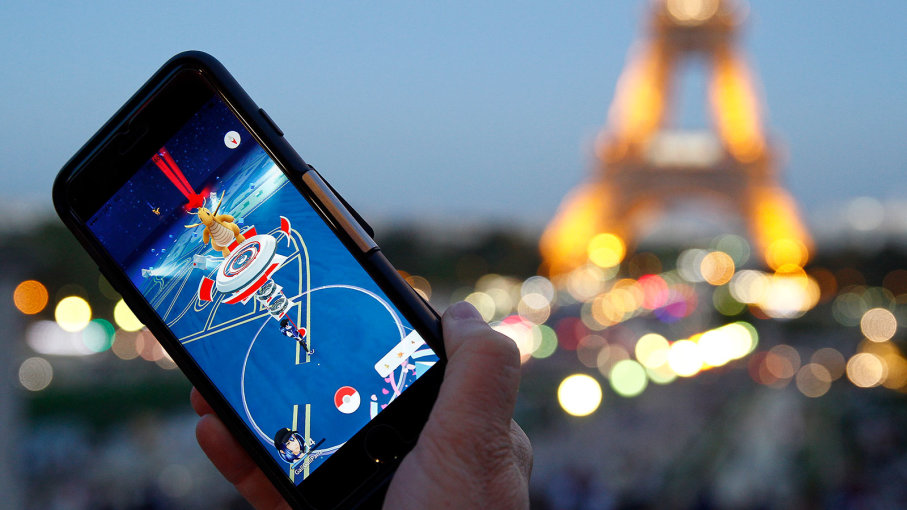
This is just a gaming aspect, you can create any game and AI in Augmented Reality and make them respond to player actions just as in a normal game, but in a different reality that player is being connected through their smartphone or any other mechanism that supports such feature. What if we take into the account a complete new level of such a wonderful real-world experience? What if a communication can become augmented so that you will not simple talk to you friend or family member through a normal video call, but your body or simpler upper body will be 3D transferred to the Augmented Reality where the communicating experience can become even more realistic. Even by using the same logic we can create a 3D model of your house helper. Like your home helper “Alisa” or Google’s, or Samsung’s Bixby. What if these AI’s can become Real Through Augmented Reality which will make your interaction with them more human, and therefore more comforting or easier, as even now people are stills struggling using it or because of its “unnatural feel”, they simply stop using it after some period of time, but with this feature it can become more efficient.
By speaking solely on AI based topic and even adding gaming industry, there are a lot of ideas that people can come up with, such as a simple game of hide and seek can be made by you using your phone and searching for Augmented Reality players or AI characters that are hidden around you house or back yard. This simple game is still utilising both of these features but in a lot more fun way, so that our old game can become much more entertaining!
Augmented reality is the blending of interactive digital elements – like dazzling visual overlays, buzzy haptic feedback, or other sensory projections – into our real-world environments.
Google SkyMap is another well-known AR app. It overlays information about constellations, planets and more as you point the camera of your smartphone or tablet toward the heavens. Wikitude is an app that looks up information about a landmark or object by your simply pointing at it using your smartphone’s camera. Need help visualizing new furniture in your living room? The IKEA Place app will provide an overlay of a new couch for that space before you buy it so that you can make sure it fits.
But AR is more than just smartphone fun. It’s a technology that finds uses in more serious matters, from business to warfare to medicine.

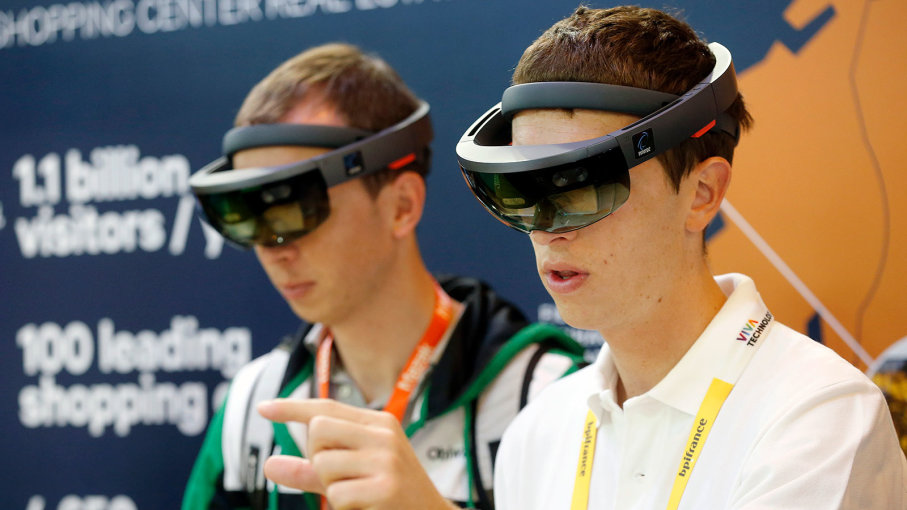
The U.S. Army, for example, uses AR tools to create digitally enhanced training missions for soldiers. It’s become such a prevalent concept that the army’s given one program an official name, Synthetic Training Environment, or STE. Wearable AR glasses and headsets may well help futuristic armies process data overload at incredible speeds, helping commanders make better battlefield decisions on the fly. There are fascinating business benefits, too. The Gatwick passenger app, for example helps travelers navigate the insanity of a packed airport using its AR app.
The possibilities of AR tech are limitless. The only uncertainty is how smoothly, and quickly, developers will integrate these capabilities into devices that we’ll use on a daily basis.
Reference: https://computer.howstuffworks.com/augmented-reality.htm
 Tair Game Development Blog